

Tonya’s Big Idea:
Students will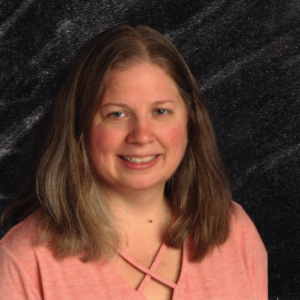 become field scientists and environmental stewards of the Chesapeake Bay Watershed. Her Challenge Project, Bay Watch, engages students in mapping local waterways and using probeware to measure pH, dissolved oxygen, turbidity, temperature, and nitrates at streams and stormwater outfalls. Students will compare their data with EPA and Chesapeake Bay water-quality standards to pinpoint pollution sources. They will then design and test solutions such as rain gardens and buffer zones. To extend their impact, students will launch a community awareness campaign that encourages residents to adopt practices that support a healthier watershed.
In her own words: "My students see STEM everywhere — in their Chromebooks, in the way a recipe becomes a lesson in measurement, even in the stairs they use when they improvise a bungee jump for their Barbies. These everyday moments make clear that science, technology, engineering, and math are not abstract subjects tucked away in a textbook; they are the tools our students use to understand and shape the world around them, both at school and at home. Being part of this program matters because it gives me a chance to expand that understanding beyond our classroom walls. I want to help show families and community members how integral STEM is to daily life and future opportunities. By connecting students’ curiosity to real-world projects and community engagement, we can build a stronger local appreciation for STEM — and hopefully inspire pathways that reach even further.”